The other day I found myself staring at a car for sale online. It wasn’t even the right car, if I’m honest. It was reasonably priced and, for a brief moment, my brain started doing that thing where it invents money that doesn’t exist. “Well, if we moved this bill, skipped buying food for three months and perhaps sold a kidney…” You know, perfectly sensible financial planning. I kept looking at the photos and wondering if there was any possible way I could make it work before eventually admitting that there wasn’t. It was disappointing, but what surprised me was how deeply it upset me. This wasn’t normal disappointment. It wasn’t, “Bugger, I can’t afford that.” It sat in my chest all day like I’d lost something much bigger than a second-hand car.
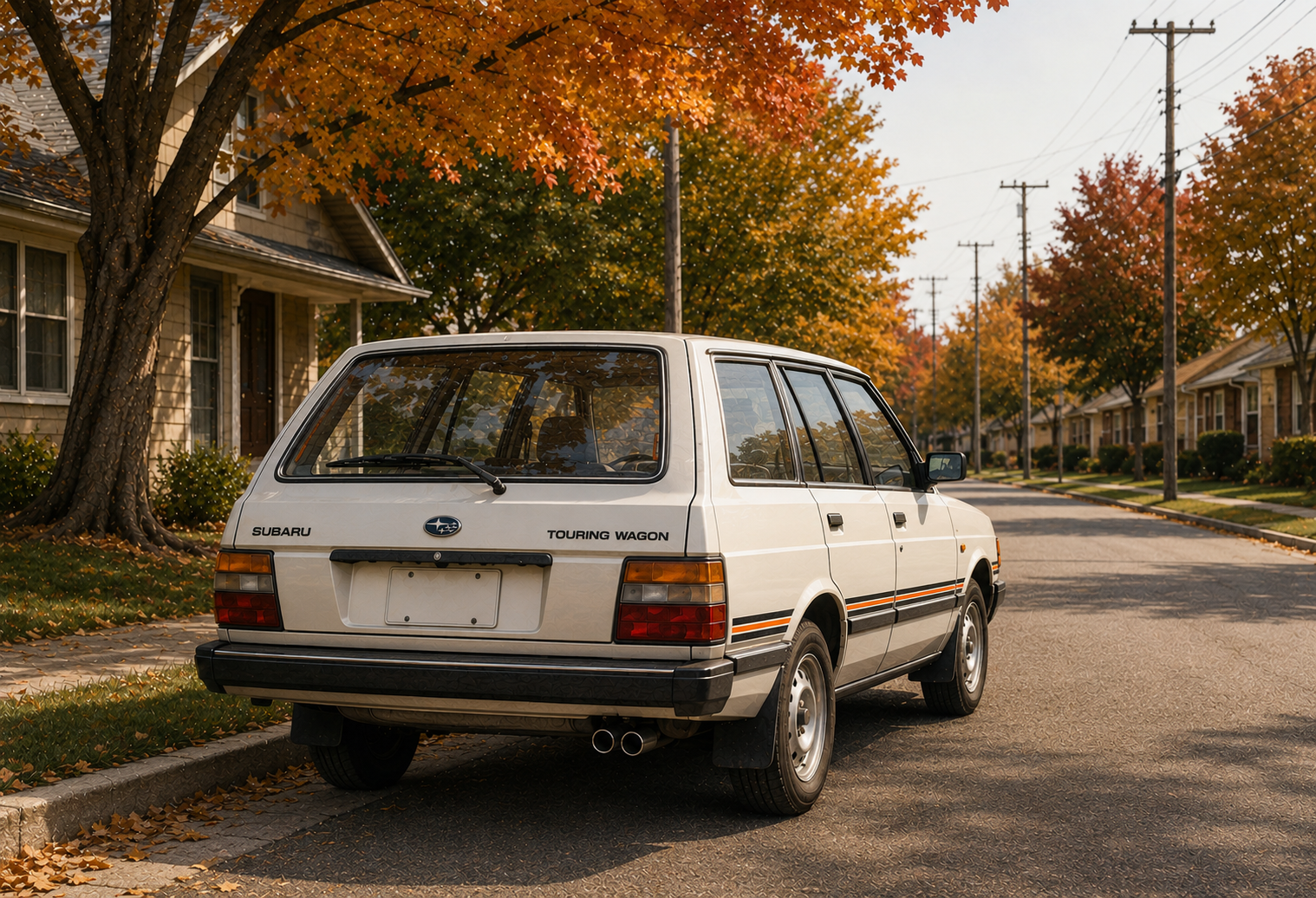
The more I thought about it, the more I realised I wasn’t actually grieving the car at all. I was grieving what the car represented. I got my full licence the week after I turned seventeen and had a 1983 Subaru Touring Wagon that I absolutely adored. Not because it was fancy, because it definitely wasn’t, but because it meant freedom. Sometimes I’d head out with no destination whatsoever and just drive. I’d sit by the ocean for hours thinking about life or take ridiculous day trips simply because I could. If things felt overwhelming, I’d get in the car and leave for a while. There was something incredibly comforting about knowing that I could go whenever I wanted, wherever I wanted, without asking anyone’s permission or relying on anybody else.
I don’t think I ever imagined there would be a chapter of my life where leaving the house would require planning, negotiation and mental preparation before I’d even put shoes on. I certainly never imagined I’d become someone who looked at a perfectly ordinary car listing and felt genuine grief. But here we are. Somewhere along the way, without really noticing it happen, I stopped wanting a vehicle and started longing for the person I used to be. The woman who grabbed her keys without thinking, who found peace by the water, who believed the whole world was available to her if she simply felt like going for a drive.
“I didn’t want a different car.
I wanted my old freedom back.”
It’s Never Really Been About the Car
Agoraphobia is one of those things that people think they understand until you try to explain it. From the outside, it probably looks like I simply don’t go out very much and therefore the obvious solution is to… go out more. Catch public transport. Get an Uber. Ask for a lift. Make plans and stick to them. I understand why people think that, because years ago I probably would have thought the same thing myself. What they don’t see is the constant negotiation happening inside my own head. They don’t see the mental escape routes, the backup plans, the fear of being somewhere I can’t immediately leave if everything suddenly becomes too much.
The funny thing is that when I think about owning a car now, I’m not imagining road trips or shopping centres or glamorous adventures. The car itself almost doesn’t matter. What matters is knowing I can leave. If Ruby has a meltdown, it’s just us. If I feel overwhelmed, I can get us home. If my brain starts spiralling halfway through an outing, I don’t have to wait for someone else or feel trapped by a bus timetable or worry that I’ve become somebody else’s inconvenience. The car isn’t transport in my mind anymore. It’s a safety net. It’s the difference between feeling trapped and feeling like I have an escape hatch if I need one.
That’s probably the hardest part to explain to someone who hasn’t lived it. I’m still scared of going out. Buying a car wouldn’t magically cure that. It wouldn’t suddenly transform me into some carefree social butterfly skipping through shopping centres with a latte in one hand and boundless confidence in the other. It would simply give me enough of a sense of safety to try. And right now, trying feels like a much bigger dream than people probably realise.
The Part That Breaks My Heart
If this was just about me, I honestly think I’d make peace with it a lot easier. I’d stay home, potter around the house, make content when I could and convince myself that a quiet life isn’t such a bad life. But it’s not just me anymore. It’s Ruby. Suddenly every limitation feels twice as heavy because it doesn’t just affect my world, it affects hers too, and that’s where my thoughts can become really cruel.
When I saw her paediatrician, he talked about daycare and how children learn from other children. Rationally, I understand exactly what he meant. Children benefit from social interaction, different environments and different experiences. My irrational brain, however, translated that entire conversation into one sentence: “Another adult would do this better than you.” That’s the voice I carry around with me. It whispers that she’s delayed because I’m not enough, that she’d be further ahead if she had a better mum, a braver mum or a mum who didn’t have to battle her own brain before leaving the house. It’s not a kind voice, but it is a very loud one.
The reality is that I don’t want somebody else to be her person. I want to be her person. I want to take her to kinder gym and watch her climb on things that aren’t my furniture. I want to wander through parks holding her hand while she discovers leaves and bugs and puddles that are infinitely more exciting than they have any right to be. I want to sit with an overpriced coffee while she waves at strangers and points at birds. I want to take her to appointments without wondering whether I’ll be able to organise a lift. I don’t want somebody else to build those memories with her. I want them to be ours.
The Four Walls Feel Smaller Every Day
Most mornings start the same way. Ruby wakes up, we have breakfast and I tell myself that today will be productive. Today I’ll get some writing done. Today I’ll make content. Today I’ll catch up on the jobs that have been piling up around the house. I genuinely believe it when I wake up, too. Every morning starts with a fresh little burst of optimism that perhaps this will be the day everything finally falls into place.
Ruby, however, has other ideas. She wants me to read with her, play with her, carry her, chase her and, at regular intervals, use me as what can only be described as a human climbing wall. I try to squeeze in little learning activities, hoping they’re enough and simultaneously worrying they aren’t. I look around the house at jobs that still need doing, glance guiltily at my computer, think about blog posts that haven’t been written and content that hasn’t been filmed, then mentally rewrite my entire to-do list for the fifteenth time before lunch. Somewhere in the middle of all that, we both get frustrated because we’re indoors again, looking at the same walls we’ve looked at yesterday and the day before.
When nothing goes to plan, which is to say almost every day, my brain doesn’t shrug and move on like a sensible adult. It immediately starts collecting evidence for the prosecution. You’re behind. You’re wasting time. You’re failing at work. You’re failing at motherhood. Ruby deserves more. Other mums manage this. Other toddlers are doing more activities. Other people leave the house without turning it into a military operation. By the end of the day I’m not usually physically exhausted as much as mentally flattened, because I’ve spent hours fighting a version of myself that seems permanently convinced I’m one bad day away from proving every fear I’ve ever had about myself is true.
“The car isn’t transport to me.
It’s knowing I can leave if I need to.”
I Miss Being Able to Leave Without Thinking
One of the strangest things about agoraphobia is that it steals things so gradually you don’t always notice what’s gone until something unexpectedly reminds you. For me, it was a car listing on Marketplace. For somebody else, it might be an invitation to lunch or a holiday someone else has booked without a second thought. You don’t wake up one morning and think, “My world is small now.” It just quietly shrinks around you until one day you realise you’ve been living within invisible boundaries for so long that they’ve started to feel permanent.
I hate relying on other people. I hate asking someone to take me somewhere knowing they have to organise their day around mine. I hate feeling like I’m asking for a favour every time Ruby has an appointment or I need to be somewhere at a certain time. Everyone in my life has been kind about it, but kindness doesn’t erase the feeling that you’re an inconvenience. It doesn’t stop me mentally apologising before I’ve even asked. It doesn’t stop me wondering whether this will be the time someone sighs before saying yes. It certainly doesn’t stop me wishing I could simply grab my keys, buckle Ruby into a car seat and quietly handle my own life.
The irony is that I don’t actually want a particularly exciting life. I don’t have dreams of spontaneous overseas holidays or a packed social calendar. I want embarrassingly ordinary things. I want to take Ruby for a walk somewhere different. I want to let her run around at kinder gym and then buy myself a coffee that costs far too much because the toddler tax apparently extends to cafés as well. I want to film a bit of content while she points at flowers or chases birds or laughs at absolutely nothing. I want to come home tired because we’ve been out living, not because we’ve spent another day pacing around the same rooms trying to convince ourselves that tomorrow will somehow be different.
The Girl With the Subaru Wouldn’t Recognise Me
Sometimes I think about my seventeen-year-old self and wonder what she’d make of me now. She’d probably recognise my sense of humour, because sarcasm has apparently survived absolutely everything life has thrown at me. She’d probably still recognise my love of the ocean and my tendency to overthink things until they become their own full-time occupation. But I think she’d be genuinely shocked by how much of my world now exists inside the walls of this house.
The funny thing is, I was always fat. I wasn’t waiting until I lost weight to start living. I didn’t sit at home hoping my real life would begin one day when I looked different. I drove places because I felt like it. I wandered around shopping centres. I sat by the beach. I disappeared on aimless drives with no destination and no reason beyond the fact that I wanted to. The body changed over the years, circumstances changed, life changed, but none of that ever took away my sense of independence. Agoraphobia did. If you’d asked that seventeen-year-old girl what her future looked like, she might have guessed a hundred different things, but I don’t think this would have made the list.
I also don’t think she would have believed someone if they’d told her she’d become a mum. Out of everything that’s happened in my life, that probably would have surprised her the most. And maybe that’s worth remembering when I get caught up grieving everything I’ve lost. That younger version of me couldn’t have imagined Ruby’s laugh, or tiny hands reaching up to be picked up, or bedtime cuddles, or hearing someone call me Mum. She’d be heartbroken by the things we’ve lost, absolutely. But I think she’d also be amazed by the little girl we’ve been lucky enough to love. Maybe she’d even remind me that life has a habit of changing in ways we never see coming, for better and for worse, and perhaps this chapter isn’t finished writing itself just yet.
Maybe This Is What Healing Looks Like
One of the biggest misconceptions about healing is that it arrives with fanfare. You picture yourself waking up one morning feeling brave, throwing open the curtains, grabbing your keys and striding confidently into the world while inspirational music plays in the background. I have a feeling my version is going to be considerably less glamorous than that. It’ll probably involve checking seventeen times that I’ve packed enough snacks, wondering whether Ruby will scream in the car, questioning every decision I’ve made since 2003 and contemplating cancelling the entire thing because staying home feels easier.
The truth is, I don’t actually need my fear to disappear before I start living again. I just need enough support around it that trying becomes possible. That’s why the car has become so symbolic in my mind. It isn’t about owning something. It isn’t about keeping up with anyone else or ticking off some adult milestone. It’s about creating enough of a safety net that my brain stops treating every outing like an expedition into the wilderness. It’s about giving myself a chance to succeed instead of assuming I’ll fail before I’ve even left the driveway.
I don’t know if that’s what healing officially looks like according to psychology textbooks, but it’s what it looks like to me. It’s wanting to take a walk with my daughter even though I’m scared. It’s wanting to improve my health because I want to be around for her for a very long time. It’s wanting to create content that exists outside these same four walls because I want our memories to include more than just the lounge room and the kitchen. Maybe healing isn’t a dramatic breakthrough at all. Maybe it’s simply reaching a point where the desire to live starts becoming just a little bit louder than the fear that’s been keeping you hidden.
I’m Not Looking for a Miracle
I don’t expect somebody to swoop in and fix my life. I know recovery isn’t something you can order online with free shipping and have delivered by Thursday. I know a car wouldn’t magically erase years of anxiety, undo agoraphobia or suddenly transform me into the sort of person who happily wanders around crowded shopping centres on a Saturday afternoon for fun. If anything, I’d probably still overthink every outing, pack enough supplies to survive a natural disaster and text somebody before I left the driveway just in case. Fear doesn’t disappear because you own a set of car keys.
What I do hope for is something much smaller and, at the same time, much bigger. I hope for ordinary. I hope for a future where taking Ruby to an appointment doesn’t require a week of logistics and contingency plans. I hope for mornings where we decide to go for a walk simply because the weather is nice, not because somebody else is available to drive us there. I hope for afternoons spent at kinder gym followed by an overpriced coffee while she chatters away in toddler language that only she fully understands. I hope for enough confidence to film a silly little video at the park without worrying that everyone is staring at me. I hope for a body that’s a little stronger, a mind that’s a little quieter and a life that extends beyond these familiar walls.
And yes, if somebody reading this is an eccentric millionaire who happens to have a perfectly good Subaru lying around and a deep desire to anonymously improve the life of an exhausted mum, I remain open to discussing your very generous proposal. Humour has always been one of the ways I’ve survived difficult seasons, and this one is no different. But underneath the joke is something very real. I’m not asking for luxury. I’m not chasing status. I’m simply trying to find my way back to a version of life where leaving the house doesn’t feel impossible, where my daughter gets to experience a little more of the world, and where I can finally stop mistaking survival for living.
“I don’t want somebody else to be her person.
I want to be her person.”



Leave a Reply