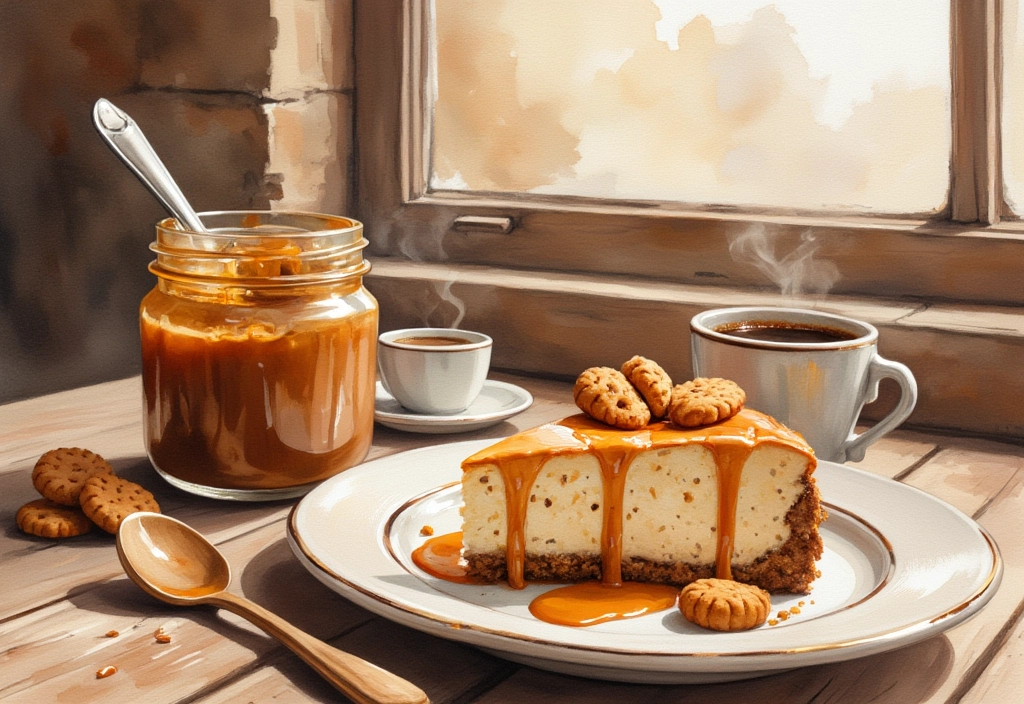
When a Biscuit Became a Cultural Moment
At the height of the Biscoff craze, it seemed impossible to escape it. Scroll through social media and there it was again — layered into cheesecakes, drizzled over pancakes, folded into milkshakes, and spread thickly across anything that would hold still long enough. Cafés redesigned menus around it. Influencers filmed slow-motion pours like it was liquid gold. Somewhere along the way, a humble biscuit was crowned internet royalty. Lord Biscoffington had arrived.
And quietly, I refused to join the court.
Not because I had tried it and disliked it. Not because I had a strong opinion about caramelised biscuits. In fact, my refusal had very little to do with flavour at all. What fascinated me was the way enthusiasm had become so universal. When everyone seems to love something at the same time, it stops feeling like a discovery and starts feeling like a script.
So I stepped back from the trend.
What began as a tiny, almost silly decision — simply saying “no thanks” to a dessert topping — slowly became something more reflective. It made me notice how easily we absorb collective excitement, how quickly repetition can feel like expectation, and how rarely we pause to ask ourselves whether we actually want something or whether we’ve just seen it enough times to believe we should.
In the end, my refusal to try Biscoff wasn’t really about biscuits at all. It was about autonomy, curiosity, and the quiet power of choosing when to participate in the cultural moments that pass through our lives.
“Sometimes the smallest acts of independence look completely ordinary — like standing in front of a menu, seeing the trend everyone loves, and calmly choosing something else.”
The Psychology of Food Trends
Food trends move quickly now. One month it’s salted caramel, the next it’s matcha, then cookie butter, then whatever the algorithm decides will photograph well under café lighting. Social media doesn’t just introduce flavours. It amplifies them.
When something trends online, it creates a shared experience. We post about it, taste it, compare it, build recipes around it. There’s comfort in that collective participation. It feels like belonging.
But trends also create subtle pressure. When something is everywhere, you start to wonder whether you’re missing something essential. It’s no longer just a flavour. It’s a conversation you’re expected to join.
Refusing to try Biscoff became less about the biscuit and more about stepping outside that current.
Overexposure and Emotional Fatigue
There’s a quiet moment when curiosity flips into resistance. It’s subtle at first. The thing itself hasn’t changed, but your reaction to it has. I’ve felt it with songs that were once catchy but slowly became unbearable after their hundredth appearance on the radio. I’ve felt it with products that suddenly appear in every advertisement, every influencer post, every carefully lit café counter. At some point the excitement stops feeling organic and starts feeling orchestrated.
Repetition has a strange power over our emotions. The first time we see something, it can feel intriguing. The tenth time, it feels familiar. The fiftieth time, it begins to feel inevitable. And somewhere along that progression, curiosity quietly evaporates. What might have once felt like discovery starts to feel like pressure.
Overexposure doesn’t just dull enthusiasm. It changes the emotional tone of the experience. When something appears everywhere, all at once, it stops feeling personal. It begins to feel like you’re walking into a room where the decision has already been made for you.
By the time I finally saw Biscoff in person sitting behind a café counter, I realised something surprising: I already felt tired of it. I had watched countless people taste it on camera. I had seen the exaggerated reactions, the declarations that it was “the best thing ever,” the recipes promising it would transform ordinary desserts into something magical.
But by then, the magic had already been spent.
Instead of feeling curious, I felt saturated. The experience had been pre-narrated by thousands of other voices before I ever had the chance to encounter it myself. My first taste would no longer be my own discovery. It would feel like arriving late to a conversation everyone else had already finished.
And that’s when I realised something simple but important.
I didn’t want my first experience of something to feel like the closing scene of a marketing campaign. I wanted it to feel like curiosity again — quiet, unscripted, and entirely my own.

The Subtle Pressure to Participate
One of the quieter realities of modern life is how often we are nudged to participate. In trends. In opinions. In purchases. In shared enthusiasm.
Participation can feel harmless. It’s just dessert, after all. But there’s a psychological rhythm to it. The more we participate automatically, the less often we pause.
Saying “no thanks” to Biscoff was small, almost trivial. But it felt like reclaiming a pause. A moment of asking myself whether I genuinely wanted something or whether I was simply absorbing collective excitement.
It reminded me that consumption is not the same as curiosity.
Identity in Small Decisions
We rarely talk about how identity hides inside everyday choices.
What we eat. What we avoid. What we hype. What we roll our eyes at. These things feel insignificant in the moment, yet they quietly communicate values, preferences, and boundaries. A trolley in a supermarket, a drink order at a café, the dessert you decline when everyone else is excited about it. None of these decisions feel like declarations of identity, but over time they quietly shape how we move through the world.
Most of our identities are not formed in dramatic turning points. They are built in small, almost invisible moments of preference. We say yes to some things. We say no to others. We follow some currents and step out of others. These decisions rarely attract attention, but they slowly sketch the outline of who we are.
For me, resisting the Biscoff wave wasn’t about superiority. It wasn’t about declaring that I was above trends or somehow immune to influence. It was simply noticing my own instinct to pause when something becomes too uniform, when enthusiasm becomes so collective that curiosity starts to feel crowded.
I’ve learned that I need space to choose slowly. To encounter things without commentary already echoing around them. I like discovering flavours, ideas, and interests in quieter ways, where my reaction isn’t shaped by a thousand other voices before I’ve even had the chance to form my own.
That preference isn’t better or worse than joining the excitement of a trend. It’s just how my mind works. I’m more comfortable observing for a while, letting the noise settle, and deciding later whether something genuinely belongs in my world.
And in the end, that small pattern probably says more about my identity than any biscuit ever could.
“Most of who we are isn’t built in dramatic life moments. It’s built in small choices — what we follow, what we ignore, and when we decide to step outside the crowd.“
Autonomy, Opting Out, and the Illusion of Missing Out
Algorithms are powerful. They show us what is popular, repeat what works, and quietly reward participation. The more something appears in our feeds, the more familiar it becomes. And familiarity has a strange psychological trick built into it. When we see something often enough, it starts to feel like something we must want.
It becomes surprisingly easy to mistake repetition for personal desire.
I’ve caught myself doing it before. Seeing a product over and over until it begins to feel appealing, even if it never interested me the first time. Exposure can mimic curiosity. Familiarity can mimic craving. After enough scrolls, it stops feeling like advertising and starts feeling like preference.
Resisting Biscoff became, in a small way, an experiment in autonomy. I found myself wondering whether I could observe a trend without absorbing it. Could I watch the enthusiasm without feeling the need to participate? Could I let something pass without the quiet anxiety that I might somehow be falling behind?
Because trends carry a subtle whisper: if you don’t join now, you might miss something.
But most of the time, we’re not missing a life-changing experience. We’re missing a flavour variation. A slightly different sweetness. The urgency we feel around trends is rarely about the thing itself. It’s about the feeling of being included in the moment.
Opting out of that moment can be unexpectedly peaceful.
Not dramatically. Not with a declaration or a manifesto. Just quietly choosing something else. While Biscoff desserts multiplied across menus, I kept choosing the things I already liked. Vanilla slices. Plain chocolate. Familiar options untouched by hype.
And in doing so, I noticed something grounding: you don’t have to perform enthusiasm to belong. You don’t have to follow every cultural wave simply because it’s moving quickly.
Sometimes autonomy looks like nothing more exciting than standing in front of a menu, seeing the thing everyone loves, and calmly deciding that today, you’ll have something else.

It Was Never Really About the Biscuit
The honest answer is that I probably will try Biscoff one day.
Not as a statement. Not as rebellion. Not as surrender to the internet’s favourite dessert topping. Just casually, the way most things in life should be discovered — without an audience, without commentary, without feeling like I’m arriving late to a trend everyone else already applauded.
And that’s the difference.
I don’t want my first taste of something to happen because it was crowned by the algorithm or endlessly praised by strangers online. I want it to happen because I felt curious in that moment. Because the choice was quiet and personal, not echoing with the collective enthusiasm of Lord Biscoffington and his loyal digital court.
Because this was never really about caramelised spread.
It was about autonomy. About noticing how quickly collective excitement can start to feel compulsory. About recognising how easily we absorb trends, opinions, and preferences without pausing to ask whether they actually belong to us.
Sometimes the smallest refusals teach us the most about ourselves. They remind us that participation is optional, even when the crowd makes it feel inevitable.
And sometimes personal growth looks far less dramatic than we expect.
Sometimes it looks like standing in a café line, seeing Biscoff on the menu, smiling politely at Lord Biscoffington’s reign… and calmly choosing something else.




Leave a Reply