The Kind of Story You Don’t Think Will Be Yours
There are some stories that feel like they belong to other people. The dramatic ones. The hospital ones. The ones where doctors speak in careful tones and give you outcomes that don’t quite land at first, until suddenly they do. This was one of those stories. Except it wasn’t happening to someone else. It was happening to me.
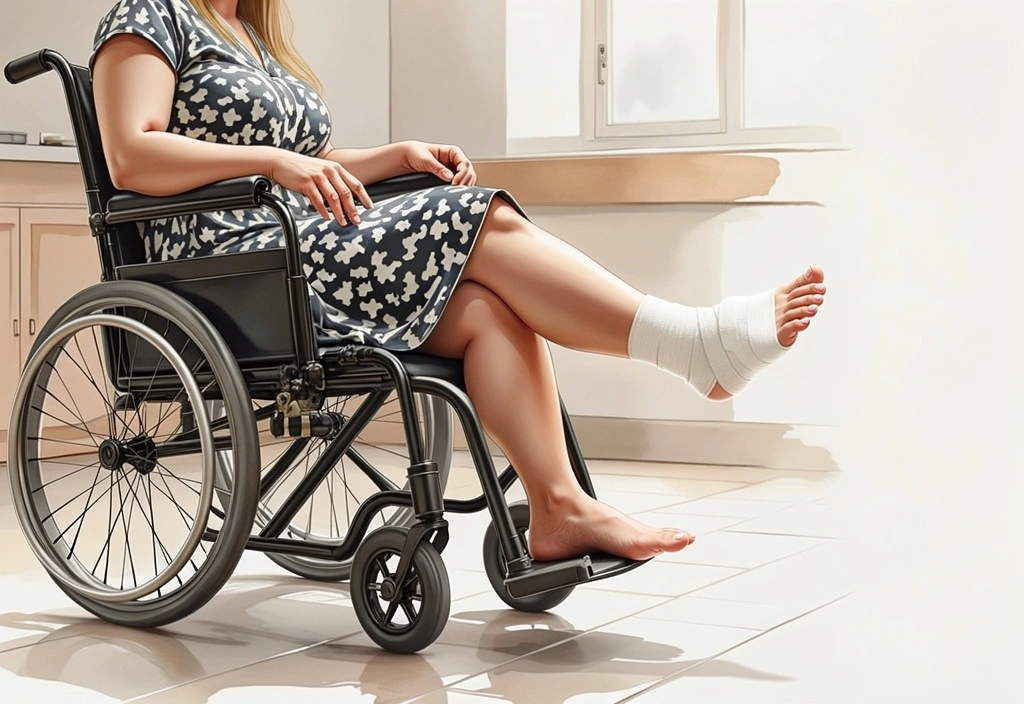
It started the way a lot of things start in real life… small, inconvenient, easy to ignore. A sore spot on the bottom of my foot. Nothing dramatic. Nothing urgent. Just one of those tiny body signals that gets quietly pushed aside because everything else feels more important.
Later came quickly.
Within a few days, that small soreness turned into something I couldn’t ignore anymore. A blister formed. Then it grew. Then it became something that didn’t just feel uncomfortable, it felt wrong. The kind of wrong your body whispers before it starts shouting. And still, part of me tried to downplay it. Because that’s what I’ve always done.
“When they asked why I don’t take care of myself,
all I had was the truth: I don’t know.”
Easter, Expectations, and Ignoring the Obvious
It was Easter weekend, which meant life was already full before anything even started to go wrong. One of Ruby’s stepbrothers was coming to stay, and I hadn’t met him before. I wanted to make a good impression. Not just a casual one, but the kind that says, you’re welcome here, you’re safe here, this is a home that cares.
So I did what I always do.
I overdid it.
I planned an over-the-top breakfast, something that felt special. Then lunch. Then a slow-cooked brisket for dinner that needed time, attention, patience. I wanted the day to feel big. I wanted it to feel like one of those holidays people remember long after it’s over.
And somewhere in the middle of all of that… my foot just didn’t matter.
It was sore, sure. But so was everything else. Life was happening. There were people to take care of, meals to prepare, moments to create. A sore foot didn’t feel important enough to stop for. Not when everything else felt like it mattered more.
The Slow Build You Don’t Notice Until It’s Too Late
If you’ve ever ignored something small because life felt bigger, you’ll understand this part without needing it explained.
It didn’t start with panic. It started with inconvenience. A sore foot when I stepped down. A moment of discomfort that passed quickly enough to be dismissed. I had things to do. A toddler to chase. A house that never quite stays under control. A brain that is constantly juggling ten things at once.
Self-care didn’t feel urgent. It never really has.
By Sunday, a small blister had formed. Still manageable. Still ignorable. The kind of thing you tell yourself will sort itself out if you just leave it alone. No need to stop everything. No need to make it into something bigger than it is.
But bodies don’t always wait for permission.
And by Tuesday night, that small, manageable problem had turned into something I couldn’t pretend was okay anymore. A large blood blister had formed on the side of my foot, and suddenly, there was no quiet voice left trying to minimise it.
The Moment You Know You Can’t Handle This Alone
There’s a shift that happens when you realise you’re out of your depth.
It goes from “I’ll deal with this later” to “I can’t deal with this myself.”
Standing there, looking at my foot, I knew. This wasn’t something I could fix at home. There was no waiting it out, no pretending it would magically improve. This needed to be seen. Properly. Immediately.
And if I’m being honest, that part wasn’t easy.
Not because I didn’t want help, but because needing help comes with a quiet kind of weight. There’s a moment where you realise you’ve let something go too far, and it doesn’t feel empowering. It feels uncomfortable. It feels exposing.
But I went.
Alone, like so many moms do. No big announcement. No support crew. Just me, walking into a hospital knowing something wasn’t right, and hoping I hadn’t waited too long.
Waiting Rooms, X-Rays, and Everything Getting Real
Hospitals have their own rhythm. Time stretches and compresses in ways that don’t make sense, and you’re left sitting somewhere in the middle of it, trying to figure out how serious your situation actually is.
I sat in the waiting room for about three hours, but about an hour in, they sent me for an X-ray. It felt like one of those small steps that might mean something… or might mean nothing at all. The X-ray technician was kind in a way that caught me off guard. Gentle. Thoughtful. He asked me to move my foot slightly to get the best images, careful not to cause more pain than necessary. It was such a small interaction, but it stayed with me.
Lying there on the X-ray table, I remember thinking how different it felt from the last time I’d had one as a teenager with a broken arm. Back then, everything had felt rushed, clinical, distant. This felt human. Slower. Softer. Like I wasn’t just another problem to move through the system.
Then I went back to waiting.
Eventually, I was moved to a chair where the first draining happened, and that was the moment everything shifted. It wasn’t just a blister anymore. It was something serious enough to document, photograph, escalate. Photos were taken and sent to a vascular team at another hospital. Conversations changed tone. Words carried more weight.
And that’s also where things started to unravel for me.
I was hysterical more often than I wasn’t.
Not just when they were touching my foot, not just during procedures, but in the quiet moments too. The alone moments. The in-between spaces where no one was talking to me and my thoughts had room to breathe. Tears would just come, without warning, without control. It wasn’t graceful. It wasn’t contained. It was raw.
At one point, they left my foot uncovered for about an hour. People were walking past. Other patients could see it. I felt exposed in a way I wasn’t prepared for. Embarrassed. Vulnerable. Like something that should have been private had been put on display.
They also struggled to find me a proper bed.
I ended up in what felt like a supply closet with a hospital bed pushed into it. There were shelves stacked with nursing clothes, a cupboard staff came to for blankets, and I was right near the intake and care area. There was constant noise. Conversations. Movement. No real sense of rest or privacy. Just a steady reminder that I was part of a system that didn’t quite have space for me.
And through all of that, I was trying to hold it together.
And not really succeeding.
“Self-care isn’t luxury for people like me… it’s the difference between coping and losing something you can’t get back.”
When the Possibilities Become Real
When I got to the second hospital, I thought things might feel calmer, more structured, more certain. Instead, it felt like another layer of waiting, another level of uncertainty I had to sit through.
I was placed in an intake area again, sitting there, exhausted. Not just physically tired, but emotionally drained from everything that had already happened. All I wanted to do was lie down, to close my eyes, to not have to hold myself together for a few minutes. But there wasn’t space for that yet.
The nurse in that area was harsh. Clinical in a way that didn’t feel comforting, just abrupt. There was no softness, no reassurance, just process. I remember feeling small in that moment, like I had to just sit there and cope without asking for anything more.
Eventually, the vascular surgery team came to assess my foot.
There were four doctors standing there, all focused, all clinical, all looking at something that had suddenly become the centre of my world. The main surgeon spoke first. He explained the best-case, mid-case, and worst-case scenarios in a way that was clear, direct, and impossible to soften.
Best case, they clear it out and it heals.
Mid case, I lose a toe.
Worst case, I lose part of my foot.
Then he left.
One of the other surgeons stayed behind to go through my infection story again, asking questions, clarifying details. And in that moment, something shifted slightly. He was kind. Gentle in the way he spoke. I didn’t feel judged. I didn’t feel like I had to defend myself or explain why it had gotten this bad. I just felt… heard.
Then I was moved to a bed.
The person next to me was loud. Constantly on the phone. Conversation after conversation, repeating the same story over and over again. I was already overwhelmed, already on edge, and I could feel irritation building in a way that didn’t feel fair, but also didn’t feel controllable. I just wanted quiet. I just wanted space. I just wanted to not feel everything so loudly.
At one point, she told someone on the phone she wanted a shower but there wasn’t one. They asked if she had asked for one, and she said yes, but there wasn’t one available. Then the next call came, and she told the same story… but this time, when asked if she had asked, she said no.
It was such a small thing, but it stuck with me. The repetition. The noise. The lack of calm.
After a conversation with the infectious disease team, where they told me I could be in hospital for up to three weeks, everything felt heavier again. Longer. More real.
Not long after that, I was transferred up to the theatre prep area.
A Small Moment of Humanity Before Everything Changed
Right before surgery, I was lying on a bed in a small waiting area just outside the operating theatre.
It didn’t feel dramatic. It felt still. Suspended.
I spoke to the anaesthesiologist, and a theatre nurse stood beside me and started talking about her kids. I talked about Ruby. About normal things. Everyday things. The kind of conversation that had nothing to do with what was about to happen.
And for a moment, I felt like a person again.
Not a patient. Not a problem. Just a mom talking about her child.
Then they wheeled me in.
Tears streamed quietly down my face, not chaotic, not loud, just there. And then everything went dark.
Waking Up to Something I Didn’t Expect
When I started to wake, everything felt heavy and distant, like I was trying to come back into my body through fog.
A nurse came over and told me the surgery went well. That was it. No details. No explanations. Just those words, floating in the space between waking and fully being aware. And I clung to them, because it was all I had.
I was on oxygen, and she kept reminding me to take deep breaths.
But that wasn’t easy.
I had been dealing with a head cold that had started about a week earlier, and every deep breath made me want to cough. My chest felt tight, my throat irritated, and the simple act of breathing properly felt like something I had to force myself to do. It was uncomfortable, frustrating, and exhausting all at once.
And underneath all of that, there was still uncertainty.
I didn’t really know anything about my foot yet. I didn’t know how bad it had been. I didn’t know what they had done. I didn’t know what came next. I just had to wait.
Eventually, they took me back to my room.
And this time, it was different.
It was a quiet two-person room, and I had the bed near the window. The view was soft, calming in a way I didn’t expect to notice, but did. There was a private bathroom. It felt like space. Like breathing room.
The woman in the bed next to me turned out to be lovely.
We didn’t talk much at first, but just before I left, we had a conversation that felt simple and kind. She wished me luck with my healing and with prioritising my health moving forward. I wished her the best for her upcoming surgery.
It was one of those quiet, human exchanges that stays with you.
Healing Isn’t Always Gentle, But It Is Powerful
Healing wasn’t instant. It wasn’t easy. But it was steady in a way that gave me something to hold onto.
During my hospital stay, I had seven cannula attempts across four different placements. Each one painful. Each one something I had to push through. By the third attempt, they brought in surgeons to do the job instead.
One of my foot surgeons came in to try.
He got it on the first attempt.
I remember looking at him and saying, half joking, half exhausted, that if he wanted to brag about it, he absolutely should. We laughed. It was a small moment, but it broke through the tension in a way that felt needed.
At one point, I also said I’d much prefer to have an epidural than go through another cannula attempt.
He told me that was also unheard of.
Which, honestly, felt about right for the entire experience.
The day after surgery, I was still very much in hospital, still being monitored, still trying to process everything that had happened. It wasn’t until two days after surgery that they told me I could go home.
By 6pm that day, I was back in my own bed.
Snuggling my toddler.
Who, understandably, was a little grumpy that I’d been gone for days.
And honestly… I didn’t even mind.
Because being there, in my own space, holding her, felt like the most grounding, reassuring thing I could have asked for.
The Part That Changed Everything
The physical side of this story healed.
The emotional side is where things shifted.
Because the truth is, ignoring my health has always been normal for me. Not in a dramatic way. Just quietly. Consistently. Putting myself last. Telling myself it doesn’t matter. That I’ll deal with it later.
But hearing that I could have lost part of my foot… that stayed with me.
Life would have gone on. It would have adapted. But the thought of that loss, the reality of how close it came, it was overwhelming in a way that I couldn’t brush off.
And when doctors asked me, “Why don’t you just take care of yourself?” all I could say, through tears, was…
“I don’t know.”
“I ignored something small because life felt bigger… until it wasn’t small anymore.”
Self-Care Isn’t Luxury — It’s Survival
Here’s what I understand now in a way I didn’t before.
Self-care isn’t the polished version you see online. It’s not long baths and perfect routines and having everything together. For a lot of us, it’s much simpler than that, and much harder at the same time.
It’s taking your medication when you’re meant to. It’s drinking water before you’re already exhausted. It’s eating something that actually fuels your body instead of just getting you through the moment. It’s going to the doctor when something feels off, even when it feels inconvenient, even when you’re scared, even when you think you’ll be judged.
It’s choosing yourself in small ways.
Because big moments like this don’t usually come out of nowhere. They build slowly, from the things we ignore over and over again.
I still struggle. I still get overwhelmed. I still forget. I still put myself last more often than I’d like to admit. But something has shifted.
Not perfection. Just awareness.
If you’re someone who struggles with self-care, start small. Take your meds. Drink some water. Get a bit more sleep. Book the appointment. Check the thing you’ve been avoiding.
You don’t have to fix everything at once.
Just don’t keep ignoring yourself.
Because sometimes, the smallest things turn into the biggest ones.
And you deserve better than that.



Leave a Reply