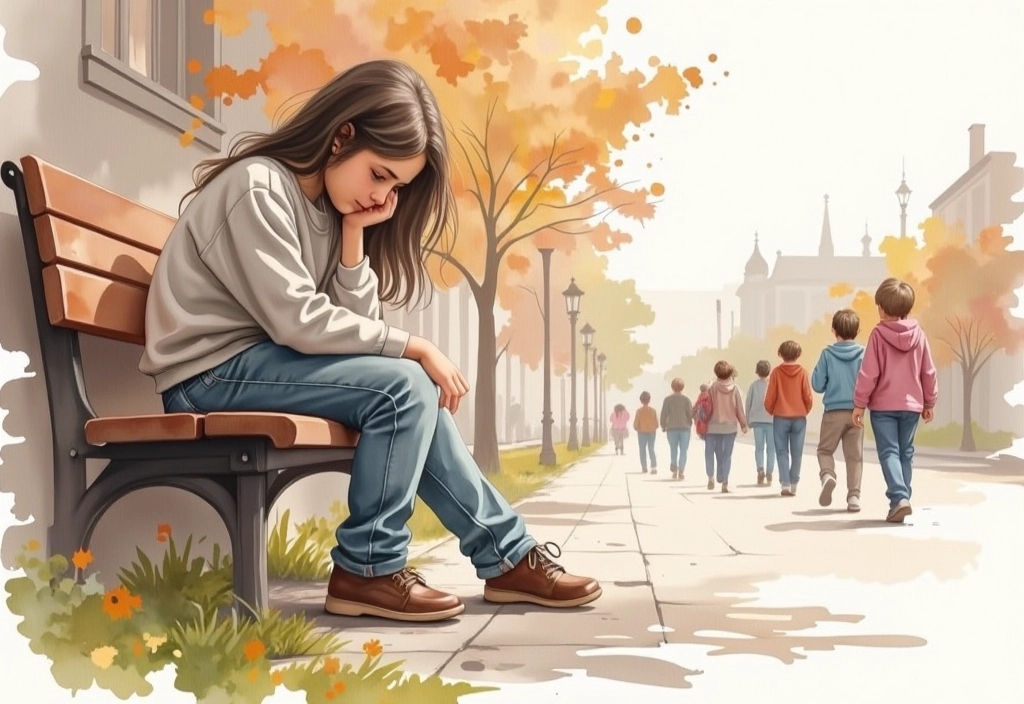
You called it teasing.
I called it survival.
And this is what it really did to me.
People like to brush bullying off as if it’s just a rite of passage — something everyone experiences, something that supposedly “toughens you up,” something you’re meant to outgrow and leave behind with your school uniform. But here’s the truth no one wants to admit: bullying doesn’t vanish with age. It doesn’t dissolve the moment the school bell rings, or when you walk out of those hallways for the last time.
It stays.
It stays in the way you carry yourself, shoulders slightly hunched as if you’re still bracing for impact. It lingers in the hesitation before you speak up, wondering if your words will be mocked. It echoes in the way you second-guess compliments, unsure if they’re real or just another setup.
Bullying reshapes the voice inside your head. It turns it sharp, suspicious, cruel — a constant reminder of the names you were called and the ways you were made to feel small. It shapes how you see the world: not as safe or welcoming, but as something you have to survive. And it shapes how you see yourself: less worthy, less lovable, less enough.
That’s what bullying really does. It doesn’t just bruise your teenage years. It bleeds into adulthood, colouring the choices you make, the relationships you build, the risks you take (or don’t take). Long after the last cruel word is spoken, the echo remains.
And that’s why I’ll never forget it. Because forgetting isn’t an option when the scars live under your skin.
“Bullying doesn’t stop when the school bell rings. It stays with you.”
It Wasn’t Harmless — It Was Life-Altering
It wasn’t just a joke.
It wasn’t just “kids being kids.”
And it definitely wasn’t “harmless fun.”
Every laugh at my expense, every whisper behind my back, every side-eye that told me I didn’t belong — it all added up. Day after day, it taught me the same lesson: you are the outsider here. It wasn’t one comment that broke me; it was the relentless drip of cruelty that wore me down until even the air at school felt heavy to breathe.
Every morning started with that same knot in my stomach, the sick weight of wondering what would happen this time. Would I be mocked for how I looked? The way I spoke? The fact that I didn’t quite fit in no matter how hard I tried? I used to bargain with myself in the mirror: Maybe today will be different. Maybe today I’ll finally get it right.
But here’s the truth I eventually learned — there is no right thing. No perfect word or hair-do or action that magically makes bullies stop. Once someone decides you’re their target, they’ll always find a reason. You laugh too loud. You’re too quiet. You try too hard. You don’t try enough. The rules shift daily, and the outcome never changes.
And that’s why bullying isn’t harmless. It isn’t something you just “get over.” It alters you. It wires fear into your body, makes you question your worth, and teaches you to expect rejection before you’ve even opened your mouth. It doesn’t build character; it builds walls.
I Changed Myself To Survive
I tried to disappear without leaving the room. I learned how to shrink myself — to sit quieter, laugh softer, keep my head down so maybe the spotlight would land somewhere else. I stopped raising my hand even when I knew the answer, because the sighs and the eye-rolls cut deeper than being wrong. I stopped speaking unless I absolutely had to, because silence felt like the safest option.
Piece by piece, I chipped away at myself, as if invisibility could protect me. I thought if I just blended into the background, maybe I’d be spared. But the truth is, when someone decides you’re a target, it doesn’t matter how little space you take up.
And when I finally stopped trying — when I just kept to myself and stayed quiet — that was wrong too. Then I was labelled stuck-up, unfriendly, or strange. No matter what I did, the outcome was the same.
That’s the cruel reality of bullying: it teaches you to contort yourself into smaller and smaller shapes, then punishes you anyway. There was no winning. Only surviving.

The Pain Came Home With Me
At school I learned to keep my head down — move through the day like a ghost and hope not to be noticed. But by the time I stepped back through the front door, the armour came off and the hurt followed me home.
I cried in the shower where no one could hear the splatter of my tears. I pressed my face into the pillow and sobbed until the room stopped spinning, ashamed that I couldn’t just flick a switch and be “fine” the way everyone else expected. The shame was a second skin — heavier than any school bag — and I wore it in secret.
And sometimes I didn’t cry at all. Not because the pain had gone away, but because I’d learned to numb myself. I learned smallness so well that the volume of feeling lowered until I barely recognised my own voice. Laughter and conversation became performances to get through the day, while the real stuff — the fear, the humiliation, the hollow ache — sat like unwelcome furniture in the corners of my life.
That’s the legacy of bullying: it doesn’t end on the school steps. It moves into bedrooms and bathrooms and quiet kitchens. It teaches you to mute who you are. It teaches you to shrink so survival feels possible. And those lessons don’t vanish overnight — they echo into adulthood until you make a different choice about how to live.
I Remember More Than I Wish I Did
I couldn’t tell you what my maths test score was in Year 8. I couldn’t tell you who won the relay on sports day or what half the classroom lessons were even about. Those details faded with time, as they should.
But what hasn’t faded are the memories I wish I could forget. I remember the way it felt to walk into a room and know — before a word was spoken — that I wasn’t wanted there. I remember the looks that passed between people, the whispers that never needed to be loud for me to hear them, the silence that screamed louder than laughter ever could.
I remember the knot of dread in my stomach that showed up every single morning, the way my chest tightened with panic before I even set foot in the classroom, the constant question mark hanging over me: What will it be today? Not if, but when — and what shape the cruelty would take this time.
That’s the part people don’t understand. That’s what lingers. Bullying doesn’t just sting in the moment; it brands itself into your memory. It teaches your body to expect rejection, teaches your brain to stay on high alert. Long after the exams and the sports days are forgotten, those feelings remain vivid, etched deep, impossible to shake.
That’s what stays. That’s what bullying really does. It writes itself into you.
“That’s what bullying really does — it brands itself into your memory.”
The Damage Didn’t Stop When School Did
I used to believe that graduation would be the finish line — that once I left those classrooms and hallways behind, the cruelty would stay locked in the past. But it didn’t. The damage came with me, stitched into the way I moved through the world.
It followed me into friendships, where I waited for the moment people would turn on me, always second-guessing if kindness was real or temporary. It followed me into jobs, where I sat at desks feeling like an imposter, convinced everyone else knew what they were doing and I was just one mistake away from being exposed. It even followed me into motherhood, where I questioned if I was worthy of the role, if I could ever be “enough” for the little life depending on me.
The truth is, bullying doesn’t just bruise your childhood — it reshapes your adulthood. It chips away at confidence. It makes trust feel dangerous. It rewires your sense of safety until the world feels like a place you’re always bracing against. And for me, I didn’t fully see how deep those roots ran until much later, when the echoes of old voices showed up in brand new chapters of my life.
Sometimes, The Past Finds You
Years later, in my twenties, I was at a shopping centre when someone called my name.
I turned around, and there she was — one of the girls who had made school so hard for me.
She smiled, looking nervous.
“Do you remember me?” she asked.
Of course I did.
And then, to my surprise, she apologised.
She told me she knew how she treated me was wrong.
She said she’d gone along with it because she didn’t want her friends to dislike her.
In that moment, I saw something I hadn’t seen back then:
Fear had driven her, too.
Fear of being next.
Her apology didn’t erase what had happened.
It didn’t change the years I spent picking up the pieces.
But it reminded me that sometimes, even the people who hurt us carry regret.
And that moment stayed with me, too.

Healing Is Its Own Journey
For a long time, I kept waiting for a turning point — a single moment that would flip the switch and make everything better. I thought maybe one day I’d wake up and the weight of the past would be gone, the voices would finally quiet, the scars would feel distant. But that moment doesn’t come. There is no neat ending, no miracle experience that undoes the damage of years spent being torn down.
Instead, healing is something slower, something harder, something I have to choose for myself over and over again. I’m still unlearning the lies I absorbed, still reminding myself that I am worthy — that I always have been, even when I couldn’t see it. I have to decide, day after day, to show up as myself again, even when it feels uncomfortable, even when the temptation to disappear is strong.
I’m still practicing how to separate my voice from theirs — to notice when the old echoes creep in and say, No. That’s not me. That’s not mine to carry anymore. Piece by piece, I’m reclaiming the parts of me I hid, the confidence I buried, the laughter I once muted.
It isn’t quick. It isn’t easy. It is ongoing work. But healing isn’t about erasing the past; it’s about learning to live differently in the present. It’s about choosing to take up space again, to be louder when you’ve been told to be quiet, to love yourself in places where others tried to make you feel unlovable.
It takes time. It is still taking time. But I am here. And I’m not shrinking anymore.
What I Know Now
- Bullying leaves marks that aren’t always visible.
- It teaches you to doubt yourself, but it can’t define you forever.
- You don’t have to carry their cruelty with you for life.
- Healing looks different for everyone, and that’s okay.
If You’ve Been Bullied Too
If you’ve been through it, I want you to hear this: you are not “too sensitive.” You are not imagining it. And you are most definitely not alone.
What happened to you mattered. The way it made you feel was real. None of it was your fault, and you never deserved to carry that weight. The names they called you, the ways they made you shrink — that was about them, not you.
You don’t have to stay small to stay safe anymore. You don’t have to fold yourself up to fit into someone else’s idea of acceptable. You are allowed to stand tall. You are allowed to be seen. You are allowed to fill every room you walk into.
And most of all — you are allowed to heal. At your own pace, in your own way. You are allowed to take up space, to rediscover joy, to laugh loudly without apology. You are allowed to tell your story, because your story matters. It deserves to be heard, and you deserve to be free.
So if you’re carrying scars like mine, consider this your reminder: you are worthy of love, safety, belonging, and peace. Always.
“You’re not too sensitive. You’re not imagining it. You’re not alone.”
I’ll Never Forget — But I’m Free
Forgetting would mean it didn’t matter.
But it did.
And I’m stronger now — not because of the bullying, but because I chose to keep going.
Because I chose to be kind, even when I wasn’t shown kindness.
Because I chose to be me, even when others wanted me to disappear.
I remember.
But I’m free.



Leave a Reply