Some mornings don’t fade. They stay lodged in your heart, glowing brighter with time. For me, those mornings were Tuesdays with my nan.
Every week, in my late teens and early twenties, Tuesday wasn’t just another square on the calendar. It was our day. I’d head to Nan’s house, and she’d already be ready — coat buttoned, handbag in hand, that spark of excitement in her eyes that made even the simplest outing feel special. We weren’t going anywhere glamorous, but the way she carried herself, you’d think we had tickets to the opera.
The Catholic church hall was only a short drive away, but to us it was its own little world. Sometimes we’d fill the car ride with chatter — about Pop’s garden, the neighbours, or whatever was happening on TV that week. Other times, we’d drive in companionable silence, the kind of silence that only exists when you know you’re safe with someone.
By the time we arrived, we’d always be twenty minutes early, early enough to find our seats at the same table, with the same people every week, buy our bingo cards, and pick up our treats: a soft drink and a packet of crisps. Simple pleasures, but they set the stage for what was to come.
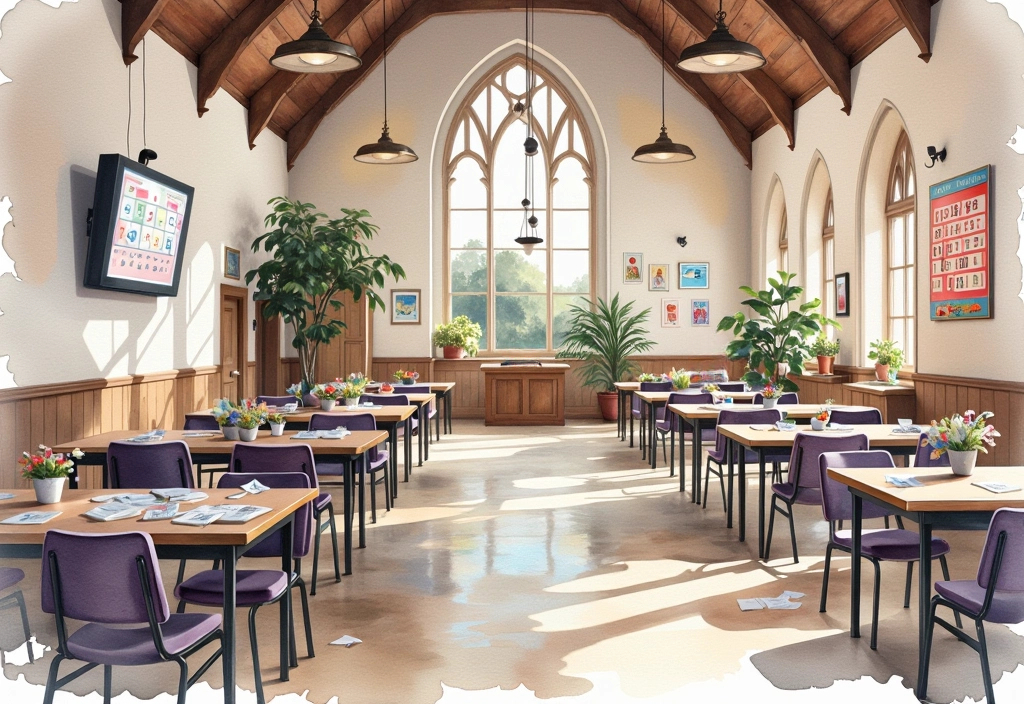
The hall itself was nothing special — cold brick walls, squeaky chairs, fluorescent lights. And yet, the moment the caller picked up the microphone, it transformed. The buzz of voices dimmed, numbers started rolling, and the anticipation in the air was electric.
“Joy doesn’t always come from the extraordinary. Sometimes it lives in a packet of crisps, a sandwich, or a game of Scrabble.”
The Atmosphere of Bingo
To an outsider, it probably seemed like a humble gathering — a group of people in coats, sitting at long tables with pens in hand. But when you were in it, you could feel the energy. Each number drawn was a step closer to someone’s win. The whispers, the gasps, the little groans when the wrong number was called or someone won for the second time in a single day — it was theatre in its own right.
Every game carried the hope of a $60 prize. That might not sound like much now, but back then it was enough to make your week. And every fifth game came with the chance of a jackpot — $100 if it was called within a set number, climbing higher if it wasn’t. That jackpot kept the hall buzzing.
But the real spectacle was the halftime game. One special card, one huge prize: $1,000. The rule was simple — you had to win it within a certain number of calls, and if it wasn’t won, the calls stretched further the next week. That game carried its own kind of hush, a collective breath held by everyone in the room.
Sharing Wins and Losses
Nan and I didn’t always win. In fact, there were plenty of mornings where we left empty-handed, laughing at how “unlucky” we’d been. But when we did win, the joy was electric.
If Nan won, she always shared her prize with me. Not because she had to, but because she loved to give. If I won, she insisted I keep the whole thing, though she celebrated as though it had been her name called. Sometimes we both got lucky in the same morning, and those were the days we left the hall with our hands full and our hearts even fuller.
The money mattered less than the ritual of sharing it, celebrating together, and retelling the story on the drive home. Nan taught me through those mornings that generosity isn’t measured by how much you give, but by the joy you find in giving.

The $1,000 Morning
There’s one Tuesday I’ll never forget.
I was down to one number on my card during the halftime game. My heart thudded with every call. “Not yet… not yet…” And then, finally, there it was. My number.
“BINGO!” I shouted, voice breaking with disbelief.
The room spun toward me, the card was checked, and when they confirmed it, I felt like my chest would burst. I had won the $1,000 jackpot. Me. At that age, it felt like winning the lottery.
Nan clapped and laughed, beaming as though she had claimed the prize herself. When I signed for the money, my hands were trembling so much I could barely keep the pen steady. To top it off, I won a couple of raffle prizes and another $60 game before the morning ended.
It was my day — but in truth, it was our day. Because none of it would have meant half as much without Nan sitting beside me, cheering me on, and sharing in the moment.
Lunch at Nan and Pop’s
Bingo was only the first half of our tradition. Afterward, I always took Nan home, where Pop would be waiting with lunch.
Every Tuesday, he set out the same spread. Orange segments cut neatly on a plate. Slices of cheese arranged just so. Homemade pickled onions in their little jar. Crisp lettuce, A dollop of home-made mayonnaise that was so delicious I’m now sad that I never got the recipe off her. Plus, a tin of salmon waiting to be transformed into my favourite sandwich.
It wasn’t fancy food, but it was the best food. The kind that nourished more than your body. The kind that tasted like love.
We’d sit at the table, chatting while I built my sandwich. Pop would clear the plates and do the dishes afterwards, and then Nan and I would pull out the Scrabble board.
Nan was a fierce player. Sharp, witty, and always ready to throw down a word I had never heard of. I learned a lot playing with her. The most important lesson was that she would always let me win to build my confidence.
I’d often stay through the afternoon, until it was time for Nan to watch Days of Our Lives. Then I’d finally drag myself away, already looking forward to the next Tuesday.

The Treasure of Ordinary Days
At the time, I didn’t grasp how important those mornings were. They felt ordinary. Routine. But looking back, I see how much they gave me.
They were lessons in joy — how it’s found in small things like crisps, laughter, and orange wedges cut by careful hands. They were lessons in generosity — how Nan shared her winnings, not because she needed to, but because she delighted in giving. They were lessons in presence — how she never rushed the games, the lunch, or the Scrabble board. She was there, fully, with me.
These are the lessons I carry into motherhood now. That connection is the real jackpot. That the rituals we repeat, even the simplest ones, are what stitch families together.
“The real jackpot wasn’t the $1,000 I once won.
It was her. It always was.”
When Life Moved Me On
Eventually, life carried me elsewhere. I moved to Melbourne to work as a live-in nanny, and the rhythm of our Tuesday mornings faded.
Nan passed away many years ago, and I’d give anything to go back for one more Tuesday. Just one. One more chance to hear her laugh, to see her excitement at the church hall, to eat Pop’s carefully cut oranges, to lose to her in Scrabble one last time.
I wouldn’t care about winning a cent. I’d only care about the company.
Why Family Traditions Matter
Looking back, I realise those Tuesdays were so much more than bingo mornings. They were the heartbeat of our family rhythm — small, steady rituals that wove connection into our ordinary lives. At the time, I didn’t recognise their importance. They were just what we did. But now, I see they were the glue that held generations together.
Family traditions don’t have to be grand or picture-perfect to matter. The truth is, it’s often the simplest ones that leave the deepest mark. A weekly meal, a Sunday walk, a favourite TV show watched together — these small moments whisper, you belong here. They become anchors that hold us steady when life starts to feel unpredictable.
Traditions remind us that love doesn’t always announce itself with fireworks. Sometimes it shows up quietly, in the familiar smell of a family recipe, the rhythm of laughter across a kitchen table, or the comfort of doing the same thing with the same people, week after week.
Even something as humble as a shared sandwich, a game of cards, or a conversation over tea can become the thread that binds a family’s story — a reminder that connection doesn’t live in the grand gestures, but in the gentle, everyday acts of showing up for one another.

Creating Your Own “Tuesday Mornings”
If you’re fortunate enough to still have your grandparents, parents, or loved ones, I encourage you to create your own rituals. It doesn’t have to be bingo. It could be coffee every Saturday, a puzzle night, or Sunday dinner. The activity matters far less than the act of showing up.
Here are some simple ways to start:
- Choose a rhythm: weekly, fortnightly, or monthly. Consistency matters more than frequency.
- Keep it simple: tea and biscuits, a walk, a TV show, or even a phone call.
- Focus on presence: put away distractions and be fully there.
- Lean into repetition: routines create comfort and anticipation.
- Capture moments: write them down, take photos, or just let them imprint on your heart.
One day, you may look back and realise these “ordinary” moments were the most extraordinary of all.
“Ordinary Tuesdays turned out to be the most extraordinary gift of all.”
Closing Thoughts
Tuesday mornings with Nan will forever be stitched into my heart. They weren’t about the prizes or the food, though both made them fun. They were about love, generosity, and time shared.
If I could have one more Tuesday, I’d take it in a heartbeat. But since I can’t, I hold on to the memory — the laughter, the sandwiches, the Scrabble games, the warmth of Nan’s company.
The real jackpot wasn’t the $1,000 I once won. It was her. It always was.







Leave a Reply