In the early ’90s, my teenage brain was obsessed with the idea of American high school. I devoured TV shows where teenagers had lockers, cheerleaders, pep rallies, cafeteria trays stacked with pizza slices and cartons of milk. There were popular girls with shiny hair, brooding boys leaning against cars, and theatre productions where the underdog always got her big moment under the lights.
That’s what I wanted. I craved it like oxygen. I dreamed about being an exchange student, about escaping into some parallel world where I’d have friends to eat lunch with, where I’d be noticed for something other than my weight, where I’d be… normal.
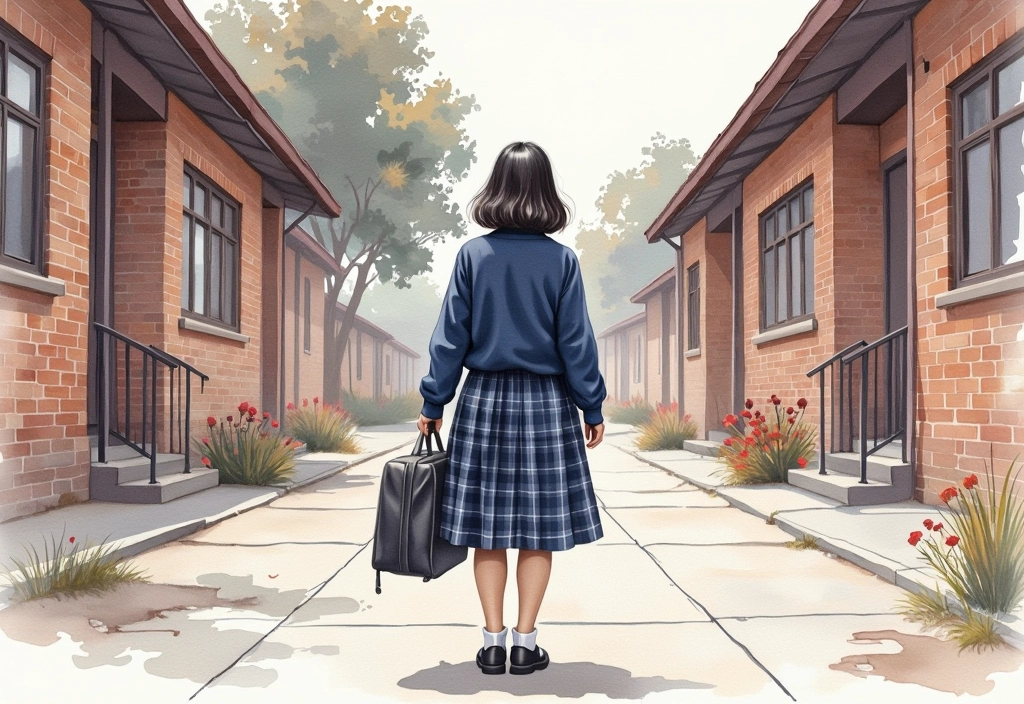
But here in Australia, my reality was nothing like those glossy fantasies. My school had scratchy uniforms, endless rules, and outdoor concrete paths connecting one brick classroom to another. There were no shiny lockers, no pep rallies, no cafeteria chatter. And even if those things had existed, I was already too broken to belong. Home was violent, chaotic, and unsafe. By the time I stepped through the gates each morning, I was already exhausted.
“I wasn’t lucky to be there,
I was allowed.”
The Illusion of Privilege
I went to a private school. A Catholic high school, even though we were barely Catholic. There were prayers before assemblies, crosses in every classroom, and teachers who talked about values as if they were woven into the fabric of the building. For a lot of families, getting their kids into that school was a badge of honour — a sign they were doing well, providing the best education they could. It was the kind of place people whispered about being lucky to attend.
But my family didn’t pay for that privilege. Each year, the school took in a handful of “charity cases” — four underprivileged families who couldn’t afford the fees but still wanted a chance to give their kids something better. I was one of them.
That meant I wore the same uniform — the navy sweater, the tartan skirt, the heavy black shoes — but it never felt like it fit quite right. Everyone else seemed to belong in those clothes, like they’d been born into that neatness and structure. I felt like a visitor in borrowed fabric, a walking reminder that charity had a uniform too.
Sometimes it felt like the whole school was built on the idea of belonging — on the idea that good families raised good students who would grow up to become good adults. But I already knew that goodness wasn’t something you could prove with a report card. I knew it had more to do with survival than scripture.
Being there wasn’t a golden ticket; it was another place to learn how to hide. Another environment where I had to smile, sit still, and pretend that privilege and perfection didn’t itch as badly as the sweater against my skin.

Trauma Doesn’t Stay at Home
People sometimes talk about school as an escape from a difficult home life. For me, it wasn’t. My home was violent and scary, but school was isolating and cruel in its own ways.
At home, I never knew if I’d walk into silence or screaming. The atmosphere was a wasteland — one moment I might be laughing with my mum in the car as we sang along to the radio, and the next, I’d be terrified, shrinking myself smaller in the shadow of violence. That instability bled into everything.
And at school? I carried all that fear with me. Trauma doesn’t politely wait at the door when you put on your uniform. It clings to you like a second skin.
I was overweight, awkward, and painfully self-conscious. That made me a target. The bullies zeroed in, and it only confirmed what I already believed: that I was unworthy. Teachers were hit-and-miss — some saw me, tried to help, and spoke with kindness. Others dismissed me like I was a lost cause, an inconvenience they didn’t have the time or patience to bother with.
When your home life tells you you’re nothing, and your school life confirms it, you start to believe the lie.
Skipping School to Survive
I didn’t always make it through the front gates. Some mornings, I’d pack spare clothes in my bag, or lie and say I had a “casual clothes day.” Instead of catching the bus to school, I’d take a different bus into the city or wander further away just to feel like I had some control.
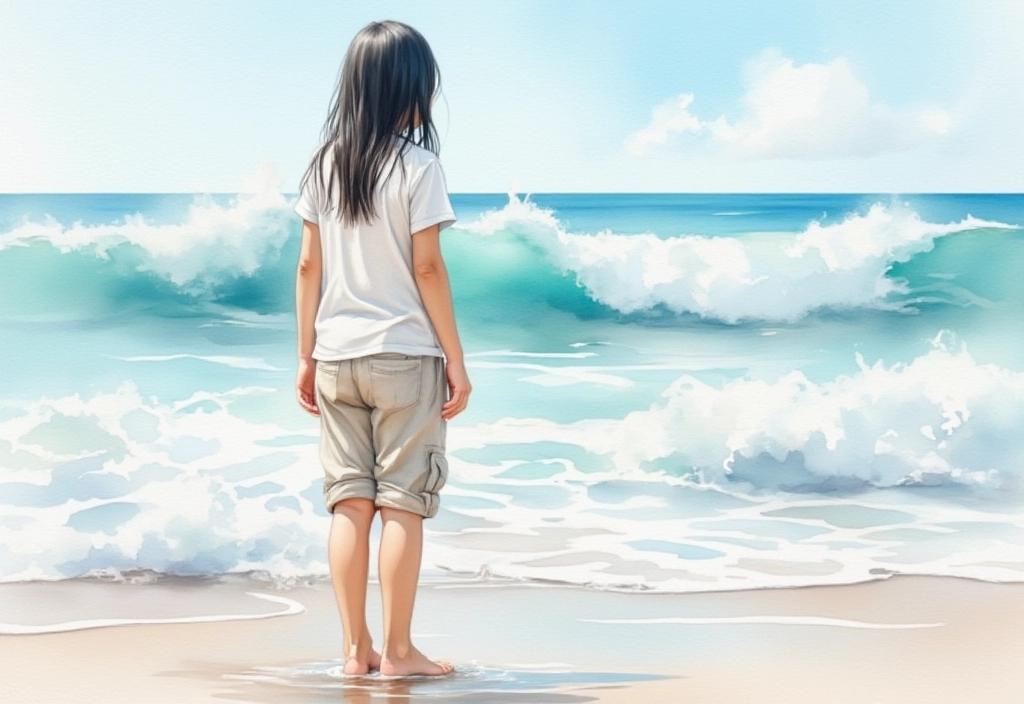
There were days when my mum herself would take time off, and we’d have what felt like a strange kind of holiday. We’d go to the beach, see a movie, grab something to eat, or even just sit in the car, listening to music and laughing. Those days were a reprieve. They were moments where she felt like my safe person. But they were scattered and inconsistent, like sunlight through a storm.
Other times, skipping school was just about hiding. I’d sit in a bathroom stall for an entire period, watching the clock hands crawl. Or I’d pretend to miss the bus so I could call my Pop to pick me up instead. Sitting in his car felt safer than being crushed between the shouting boys and whispering girls on the school bus.
On paper, it looked like rebellion. In reality, it was survival.
“On paper, it looked like rebellion.
In reality, it was survival.”
The Bullying That Broke My Voice
High school bullying doesn’t always leave bruises. Sometimes it leaves silence.
The taunts about my body, the exclusion from social groups, the whispered jokes when I walked past — it all compounded the shame I already carried. I was smart, but chaos at home meant I couldn’t focus, couldn’t complete homework, couldn’t live up to what I knew I was capable of. My grades slid, and the bullies slid in with them.
The theatre was my one escape. I loved performing, and being on stage gave me a fleeting taste of belonging. But even there, I couldn’t break through. I was never cast in a lead role. I was too big, too invisible, too “not right” for the spotlight. Standing in the wings, watching other girls shine, I learned to dim my own light.
And the secrets piled higher. I never told anyone how much I hated myself. I never told anyone that sometimes I thought about disappearing completely. I never told anyone how much it hurt to walk through those corridors each day.
The Library Ghost
If you had seen me in the schoolyard, you might have thought I was fine. I wasn’t causing trouble. I wasn’t failing spectacularly. I wasn’t loud or disruptive.
But invisibility was my armour. I made myself small, hoping if I blended in, the bullies would get bored. Hoping teachers wouldn’t call on me. Hoping no one would notice the storm I was carrying.
At lunch, I often ate alone. Sometimes I hid in the library, pretending to read. Sometimes I picked at food just to fill the time. Other girls were at the mall, having sleepovers, getting invited to parties. I was never on those lists. I didn’t even pretend to hope for it.
I wasn’t really living a teenage life. I was enduring it.

The Teachers Who Tried — and the Ones Who Didn’t
I think often about the teachers who looked at me and actually saw me. The ones who pulled me aside to ask if I was okay, who praised my efforts even when I was falling behind, who reminded me I had value.
Their kindness was like water in a drought. Brief, nourishing, but never enough to erase the deep cracks.
Then there were the other teachers — the harsh ones, the dismissive ones. The ones who made me feel stupid, lazy, or hopeless. Their words cemented the shame already etched into my skin.
Looking back, I wonder if they knew. Did they see the girl in survival mode? Or did they just see another teenager they didn’t think was worth the effort?
The Secrets in My Backpack
I carried more than books. My backpack was heavy with unspoken words and Every day, I carried more than books. My schoolbag held the kind of heaviness no one else could see — the tension of home life that made my stomach knot before the bus even arrived, the echo of cruel laughter in hallways, the constant fear that speaking up would only make things worse. I learned to swallow it all down and smile like everything was fine, because it was safer to blend in than to risk being noticed.
There was also the quieter weight — the shame of always being left out, of pretending I didn’t care about sleepovers or group projects or inside jokes. There was the dream of escape too, one I tucked deep inside and carried like contraband hope. No one could see any of it, but it was always there, pressing into my shoulders with every step. And because I didn’t have the words or the safety to share it, I just kept carrying it — alone.
“I wasn’t really living a teenage life.
I was enduring it.”
What I Lost — and What I Learned
I never had the teenage years I longed for. I didn’t go to sleepovers. I didn’t hang out at the mall with friends. I didn’t have a circle to whisper secrets with or giggle about boys. My high school experience was shaped by absence: of safety, of belonging, of connection.
But in that emptiness, I also learned resilience. I learned how to survive in isolation. I learned how to retreat into creativity and imagination. I learned how to read people’s moods instantly — a survival skill that would later help me understand and support others in their pain.
And I learned that silence isn’t the same as weakness. Sometimes silence is strength in disguise.

Why This Story Still Matters
I don’t share this for pity. I share it because there are still teenagers walking through classrooms and courtyards, carrying heavy secrets no one can see. Kids who smile on the outside but are falling apart on the inside. And maybe you were one of them. Maybe you still carry echoes of those years in your chest — the sting of being left out, the echo of cruel words, the ache that rises when you see groups of friends laughing together and feel that familiar distance.
If that’s you, please know this: you weren’t broken. You weren’t to blame. You were surviving in a system that didn’t see you, and the fact that you’re still here now is proof of your strength. Healing isn’t about rewriting the past — I’ll never get the sleepovers I missed, the American-style high school moments I dreamed about, or the carefree bus rides I longed for. But I can offer compassion to the girl I was.
I can remind her — and remind myself — that she deserved more. That she was worthy of love, safety, and belonging. That her story matters. And maybe, in telling it, I can remind someone else too: your secrets don’t make you unworthy. Your silence doesn’t make you weak. You were never the problem — you were the proof that surviving counts as strength.




Leave a Reply